Search This Blog

Showing posts with label Krishna. Show all posts

Thursday, April 7, 2011

Carob banana muffins

Hey Im back! Finally spring is here, Im so delighted! :-) Krishna says in the Bhagavad Gita that of all seasons He is flower bearing spring. I can see why! Everything wakes up after the austere winter and becomes fresh and vibrant with new leaves and delicate petals. Its my favorite season next to Autumn.


So here is yet another muffin recipe! I havent used carob in my baking for ages, so that decided the flavor of these muffins. They're moist and scrumptious. If you prefer you can always replace the carob with cocoa powder. I ate mine with a strawberry sauce on top! :-d There's a recipe for that in one of my earlier posts. Happy baking!

Ingredients

Mix:
2 cups all purpose flour
3/4 cup carob powder
3/4 cup wheatgerm
3 tsp baking powder
1/3 tsp sea salt
1/2 cup carob chips
1/2 cup cranberries
3 TBSP cinnamon pow (optional)

Blend:
2 ripe bananas
1 and 1/4 cup maple syrup
2-3 TBSP double cream (optional - its helpful as an egg replacer and works well with carob)
3/4 cup safflower oil
3 TBSP apple cider vinegar
2 TBSP vanilla essence
Approx 1 cup water

Method 

Mix both batches of ingredients together. Fill into oiled muffin tray - I always sprinkle something e.g. wheatgerm inside the muffin cups before filling for easier removal once baked. Sprinkle cane sugar on top. Bake in preheated oven - 375 degree fahrenheit, for approx 40 mins. Remove from tray while warm. Serve cool.

Yummy! :-)

Tuesday, May 11, 2010

From Rajapur with Love


There are many beautiful and fascinating temples in India with timeless Vedic traditions of worship at the center of a culture of  devotional expression.


The ancient devotional traditions of India e.g. Vaishnavism recognize that God or Krishna chooses to manifest in many ways according to time, place and circumstance. One of these ways is through very specific forms which are described in the Vedic scriptures.


The Vedas explain that the Lord chooses to be present in such a form or deity for the benefit of mankind to give one the opportunity to develop a personal relationship of loving reciprocation with the Lord. To this end, devotees practice offering humble services or offering everything they do in their lives up to the Lord with the intention of pleasing Him. That means putting the Lord into the center of ones life.


This is known as as the practice of Bhakti yoga or devotional service. So in the temple one can observe how the Lord in the form of the deity is treated just like an honored guest i.e offered new outfits regularly, fresh flower garlands, water, meals throughout the day, prayers, music and dance, a bed to rest, and many ceremonies and festivals. Temples are sacred places for reconnecting with the divine and for purification of mundane worldly conditioning which binds one into materialistic pursuits.


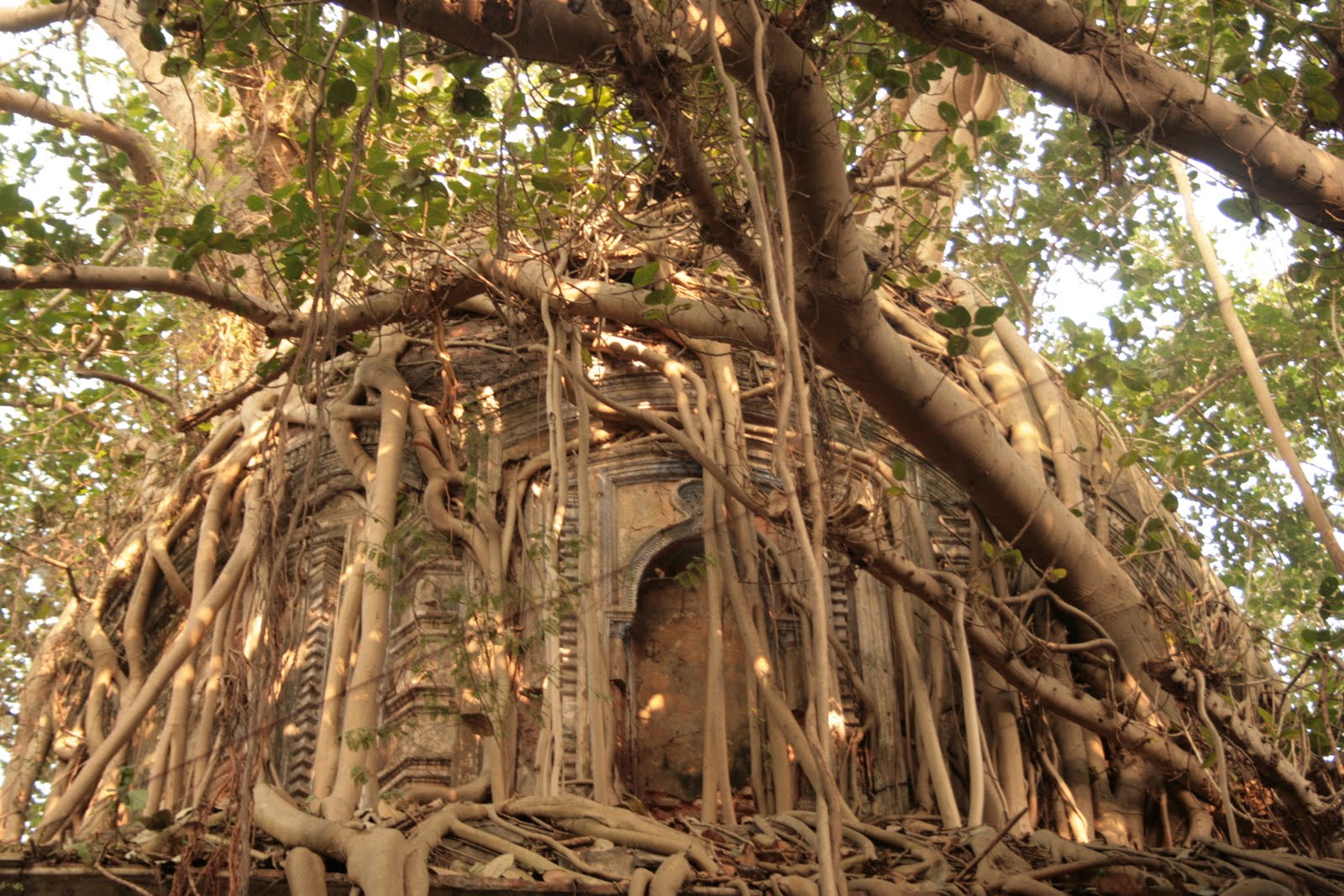
One of these temples I had the joy of visiting is the Jagannatha Mandir nestled amongst the jackfruit, mango and banana groves in Rajapur, Bengal. Jagannatha refers to He who is the most merciful Lord of the Universe, and this particular temple houses the extraordinary forms of the Lord known as Jagannatha, Baladeva and Subadhra. These deities are worshiped by the local people of Rajapur and Mayapur and many pilgrims come from all over the world to visit this temple.


There are many stories of miracles which have occurred and continue to occur into the present day experienced by the pilgrims who come to see the Lordships in the temple. Examples include the blind having their sight returned, infertile couples suddenly able to have children, cures from various diseases, people who had giving up ever finding a partner for marriage soon finding a spouse etc after praying to these Deities for help.


I had a the wonderful opportunity to spend some time at this temple watching the cooks preparing sweets for the late noon and evening offerings. The cooks I met are an sweet elderly Bengali lady and her son who team up together to cook. Initially they seemed a little reserved and I felt shy not wanting to intrude in their meditative and devotional cooking process, but by the second day we were chatting away in broken English, sign language and my few words of Bengali and Hindi.

I was quite amazed to see how incredibly resourceful and  creative they are with the least facilities and ingredients. I consider myself to be a very creative person, so thats saying something! :-) The kitchen is minimalistic and by western standards it would be considered a bare unfinished room. But its functional, with a stone floor which can easily be washed down, a washing area with running water on one end, and a counter on the other end. A few sparse shelves hug the walls, several wicker and bamboo baskets holding vegetables, fruits and clay utensils grace the corners, and the big empty floor space in the middle is the main center of activity.


In this kitchen one cooks squatting on the floor or sitting on a small wooden chonki (wooden table) in front of several gas burners holding woks (deep bowl-like pots for stir-frying etc), a basin of water for washing on the side, ingredients and utensils on another side, all within easy reach. One person works at the cookers and another at a counter rolling and shaping various pastries and sweets from dough made with many kinds of spices, nuts etc.

The cooks here have learnt the art of making certain signature sweets of the ancient Jagannatha temple in Puri, Orissa. These recipes have been passed down through the generations of priests and cooks of Lord Jagannatha and also to these cooks who have combined these with their own local specialties. The food they prepare is offered to the Lord where upon it is considered karma free, sanctified food known as prasad or the Lords mercy. It is distributed to eager pilgrims who honor it with great eagerness.

So I will share two of these recipes with you. Have fun! :-)

Kaja - Jagannatha Tongues

White flour - use as much as you feel you will need
A little ghee - clarified butter rubbed into flour to create a fine crumb texture
Water - enough to make a stiff smooth dough
A wok of ghee or oil for deep frying

For the icing, you can either use:

Traditional glaze:
4 parts sugar to 1 part water
Cook down into a syrup - that is it falls off the spatula in thick slow drops

My own preferred glaze:
Icing sugar mixed with enough freshly squeezed orange juice to make a runny icing
Pistachio nuts crushed fine

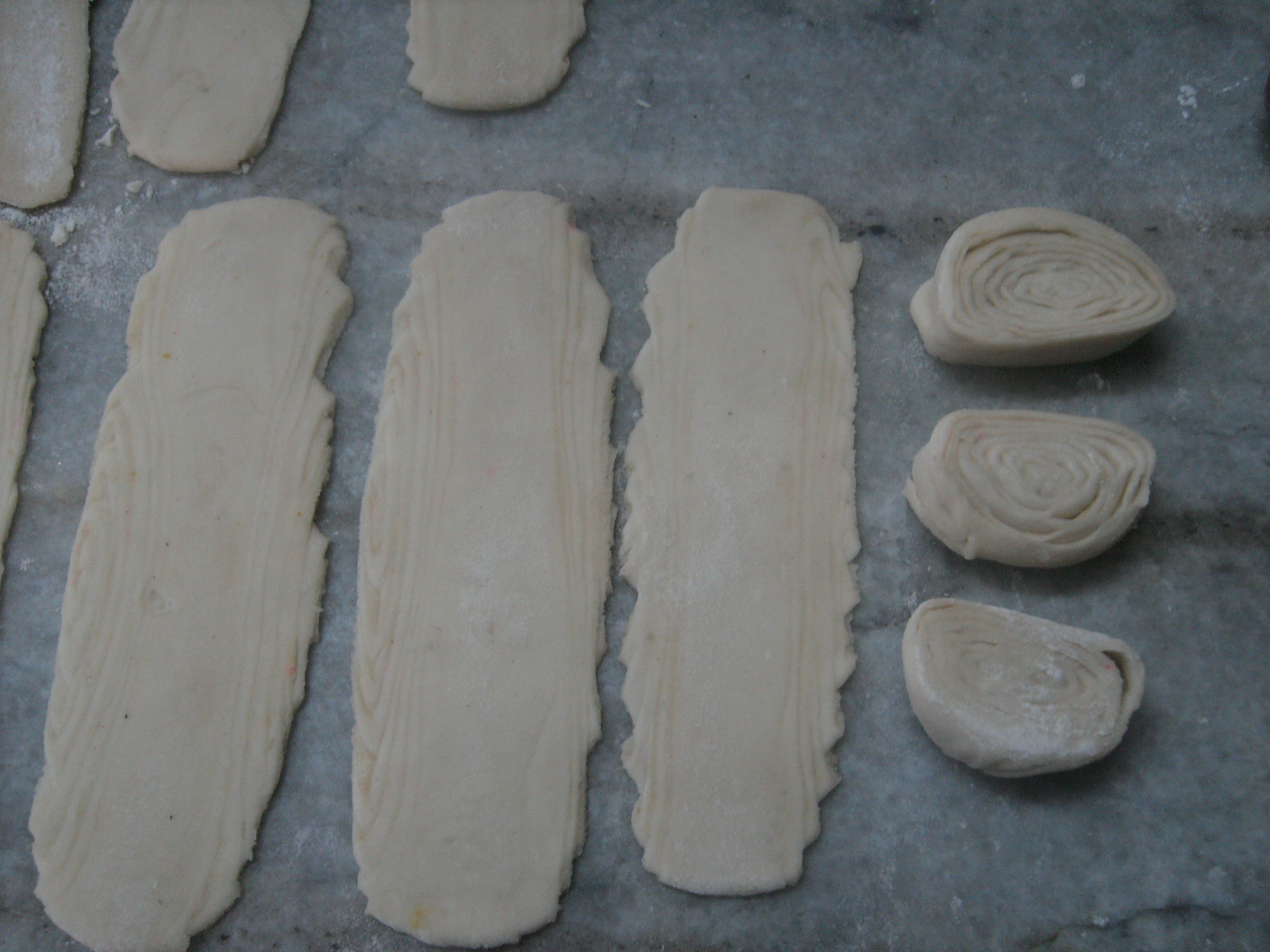
Knead the dough for a good 10 minutes til dough is stiff yet very smooth. Let it rest for a few minutes. Then on a floured surface roll out the dough til it is approx 1 millimeter thick. Smear soft ghee over the pastry and then sprinkle it with an even dusting of flour. (This is important to create layers later).


On one end of the pastry create a ridge by turning over the side onto itself. Use this ridge to roll up the whole pastry evenly into a snake. Seal the edges by pinching the dough together all the way across and on either side. Then take a sharp knife and cut the dough into even slices approx 1 - 2 inch thick.

Put on the wok of ghee to heat over a medium flame. If you choose to make a traditional sugar glaze now is the time to put it on to cook down.


On a floured surface roll out the slices into long rectangular shapes, rolling on one side once. Turn over, sprinkle with a little flour as needed, and roll again. Repeat this procedure until the pastry is a strip about 3 inches long and the edges will look layered and fluted.


Check to see if the ghee is hot enough for use by throwing a small piece of dough in. If it sinks and immediately rises, sizzling, its ready to go. Gently slide the kaja into the hot ghee. You can fry about 6 at a time in a medium sized wok. When it rises up bob them up and down a little with the back of your spatula to encourage the layers to puff and separate a little. Turn them over when they are golden brown.When done remove from wok and drain in a colander lined with paper towels if you have. Gentle - they are fragile.

Then when cool enough to handle transfer to a tray or if you are using the traditional glaze carefully slide them into the syrup and submerge them. Remove from the syrup as soon as they are covered in it and transfer onto a tray to cool and dry off.


If you are using my preferred glaze, simply dip them into the runny icing and place onto a tray to dry off.

Jagannatha Roses

Use the same dough cut into slices and roll spiral side up into rounds. Turn over on a floured surface on each roll to prevent ghee in the layers from squeezing out. When it is an even round, deep fry the roses using the same method as for the Kaja til golden brown. Drain and follow either of the same procedures above for glazing. Sprinkle crushed Pistachio nuts over the top to garnish.


The secret ingredient to make the food you cook taste extra special is to prepare it with a mood of love, offer it to the Divine/the Lord and enjoy! :-)

Friday, September 18, 2009

Check out this Article on Kirtan from The Boston Globe

East meets West

Gaura Vani combines sitars and chants with rock for a genre-defying musical mix


Gaura Vani (center) and As Kindred Spirits have performed at such diverse events as Lollapalooza, Burning Man, and a celebration of the Obama inauguration.

Gaura Vani (center) and As Kindred Spirits have performed at such diverse events as Lollapalooza, Burning Man, and a celebration of the Obama inauguration. 

By Tripp Underwood Globe Correspondent / September 18, 2009 

Gaura Vani, a Hare Krishna musician who combines traditional Indian kirtan music with Western elements such as 12-string guitar, gospel choruses, and hip-hop rhythms, is a musical product of his environments.


Born in Los Angeles, Vani was sent to India at a young age to study sacred music by his Hare Krishna parents. Upon completing his studies he returned to the States, where he began combining spiritual Indian kirtans - a form of rhythmic, call-and-response chanting over various musical accompaniments - with the other music of his youth: rock, pop, and world music.

The result is a genre-defying hybrid of ancient Indian sacred music and modern Western styles. Sitars, mridanga drums, and chanted vocals meld smoothly with guitars and the occasional hip-hop vocal flow, all with clearly defined verses and choruses and a focus on melody not usually found in traditional Indian music.
And though his music contains deeply spiritual lyrics and a layering of styles that spans centuries and continents, Vani maintains a surprisingly simple interpretation of sacred music and its relationship to its audience.

“Kirtan is just the process of using chant and music to clean the heart,’’ he said from his home outside the nation’s capital. “It’s like an ancient can of Scrubbing Bubbles to clean our hearts and help figure out who we are beyond the body.’’

Comparing a 5,000-year-old form of meditation chanting to a modern-day bathroom cleaner may sound like an odd analogy, but it makes sense when coming from a cross-cultural artist like Vani, whose latest CD, “Ten Million Moons,’’ is gaining attention in spiritual music circles as well as in the secular world.
“Music is just an expression of the heart and soul,’’ he says. “All I’m doing is drinking from different springs and bringing together in my heart what seems natural.’’

Intentional or not, Vani’s eclectic style has allowed him to take his songs and message from Krishna temples and yoga studios to a wider range of audiences. In the past year Vani has performed at diverse venues for all types of music fans from backpacked Chicago indie rockers at Lollapalooza to hippies and modern primitives in the Nevada desert at Burning Man to a jubilantly dancing crowd at the Church of the Holy City in Washington, D.C., who had gathered to celebrate President Obama’s inauguration.

Vani and his band, As Kindred Spirits, bring their unique brand of kirtan music to Boston Common on Sunday. The performance is sponsored by the Boston chapter of the International Society of Krishna Consciousness to celebrate Rath Yatra, one of the most sacred holidays in the Hindu world.
The embracing of different cultures and musical styles is apparent not only in Vani’s music but also in his signing to Matrology, a subdivision of Equal Vision Records, a New York label best known for releasing punk rock and hard-hitting emo albums.

Ray Cappo, a yoga teacher and former punk musician who leads spiritual pilgrimages to India and now answers to the Krishna name Raghunath, says elements of the hardcore punk subculture and Hare Krishna teachings have far more in common than many realize. “A lot of people in the hardcore scene are very concerned with similar issues that occur in Krishna consciences like anti-materialism, vegetarianism, and straight edge,’’ Raghunath says, referring to the cultural movement that eschews drugs and alcohol.

“Twenty-five years later that is how we still live our lives,’’ says Raghunath, formerly of the underground band Shelter, which combined Krishna-influenced lyrics with razor-sharp guitars and blistering drum beats. “Some things may have changed with time, but it’s a form of continual evolution, and in one sense it’s exactly what we were doing in the punk scene when we were teenagers.’’

Vani shares Raghunath’s belief that music inspired by spirituality should retain core elements but be able to evolve with the times and changing tastes of followers.

“Spiritual music is a living tradition . . . from ‘Johnny B. Goode’ to the Bad Brains,’’ says Vani. “It grows and is alive. The music we make is just a natural progression of that.’’

Friday, September 11, 2009

Re. Kirtan Questions


During our last cooking class, some of you asked me about kirtan -- Indian style music jamming sessions -- which are inseparable from the lifestyle of a Krishna girl like me. So let me tell you something about our music, with the understanding that this is a very brief summary - books have been written on its meaning and ancient history. See: www.yogaofkirtan.com

Basically Kirtan is an Indian call and response style of singing prayers, sacred mantra's & chants in unison. It is a means of  reaching out for and connecting with the Lord. Sankirtan or public kirtan especially of the Hare Krishna Mahamantra was popularized in Bengal over 500 years ago, by Sri Caitanya Mahaprabhu -- who was the original "Hare Krishna" -- and this chanting was predicted to spread to every town and village. This is the mantra which the Krishna community  are most known for, hence the name "Hare Krishna's":    

                                                 Hare Krishna, Hare Krishna, 
                                                      Krishna, Krishna, Hare, Hare,
Hare Rama, Hare Rama
  Rama, Rama, Hare, Hare.


Singing and dancing in glorification of the Lord are considered by the Krishna folk to be a natural expression of the soul -- watch carefree children come in contact with a kirtan -- they just start rocking it out. Growing up with this culture our Krishna youth have kirtan in their blood e.g. The Mayapuris . We consider kirtan to be the simplest means of worship in this age of quarrel and hypocrisy as it unites people from every background on a spiritual level. You don't have to be a Hare  Krishna to participate, anyone can do it! :-)
 
Kirtan facilitates expressing ones heart and devotion, and traditionally it was sung in temples for Lord Krishna's pleasure, but it can be done anywhere.(Krishna is a name for God or the Supreme Divine Being). Invoking Divine presence in this way serves many purposes e.g. it sanctifies the atmosphere, cleanses the mind and heart, uplifts and refreshes ones spirit, gives joy, brings the community together and you can even get a good work-out when you dance. It is great fun!


Some of my Krishna youth friends on tour through Utah doing their fantastic kirtan. These are some fun pics they took enroute! :-D Check out their cool website: www.gauravani.com


Kirtan is typically accompanied by instruments like karatal (Indian style cymbals), Mridanga (traditional Indian double headed clay drum), gongs etc. Contemporary kirtan is often a fusion of Eastern and Western elements with instruments such as a base guitar, jembe, etc.


Bhajans are generally done sitting together and typically a harmonium -- which is like a cross between a piano and an accordian -- accompanies the singer.
Kirtan & bhajan are traditionally chanted in the ancient Sanskrit language, or in Bengali, Hindi or another dialect. Each provence in India has its own kirtan styles, and local saints who composed sacred chants.


Some places are famous for their cultural presentations
e.g. Orissa and Manipuri Drummers and dancers.
Check out: Contemporary Orrisan dancers.


Under the guidance of Srila Prabhupada -- the founder of ISKCON (the International Society for Krishna Consciousness) -- kirtan was brought out to the streets and parks of the the USA and worldwide in the 1960's and 1970's.


Today kirtan is becoming increasingly popular in the western world. You will find many yoga centers and people from all walks of life who host kirtan events and party's.


People from different faiths can also take up kirtan and even incorporate it into their own system of worship. In fact there is a Rabbi who has become known as the Kirtan Rabbi,  who takes the kirtan principle and form, applies it to the Jewish prayers and ceremonies, and people are loving it. Check it out: http://www.kirtanrabbi.com/


If even 10% of the worlds population take to congregational chanting of the Lords names or sankirtan, the Krishna people believe that it will bring about unity, peace and happiness in the world.


So next time you see Hare Krishna people chanting out there on the streets, you will have a better idea what they are doing and maybe you can stop a moment and join in, or at least appreciate their endeavors.

Every year the Krishna folk host 24 hour kirtan festivals in various centers annually. In fact there will be one at our West Virginia Temple in October if you are interested to participate.
 
And every Sunday at every ISKCON Hare Krishna temple there is an open house for people to come and do kirtan, hear some philosophy and share a vegetarian dinner together. You can check out your local center at: Potomac Krishna Temple .

For some great kirtan music by our Krishna community and more info on it, why not check out these links:


Below are more samples of kirtans & bhajans with our Krishna community, it comes in all styles traditional, western & a fusion of both. Feel free to ask me any more questions on kirtan or the Krishna people and our way of life, I enjoy hearing from you!
Happy listening! :-)
                                                                               

      ShareThis